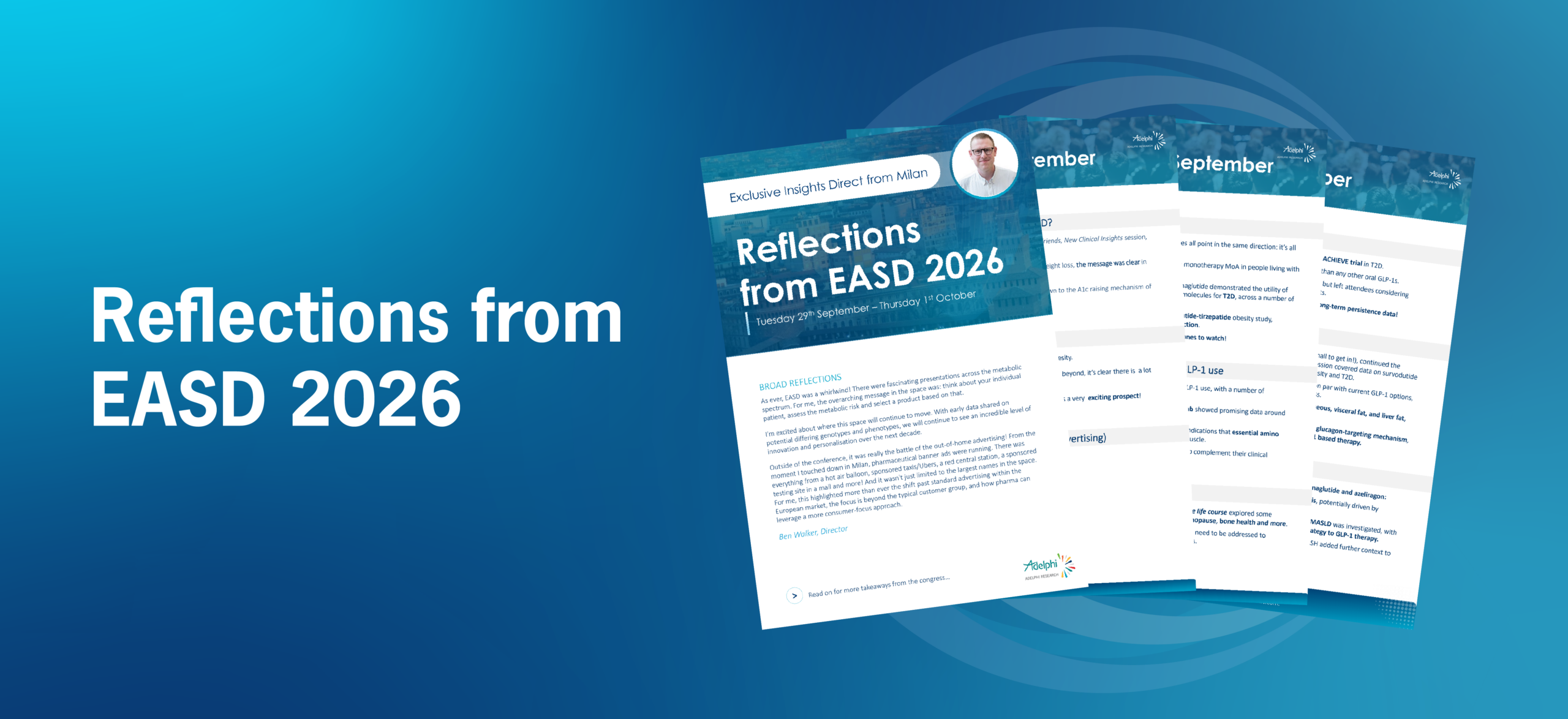
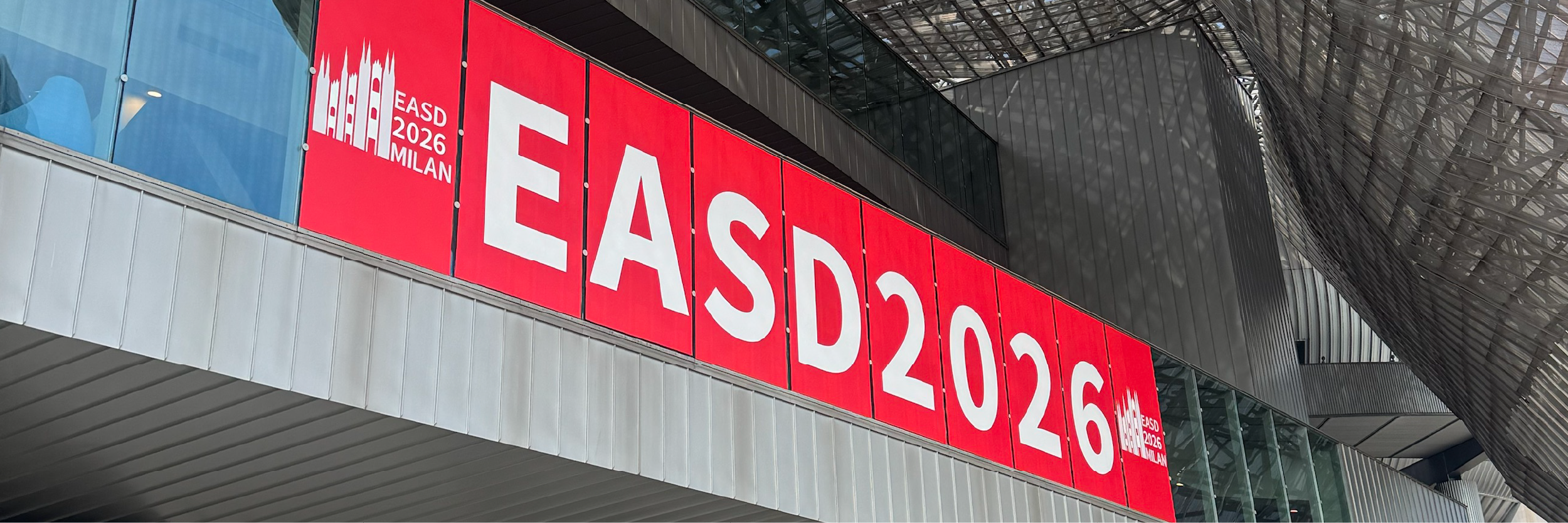
The European Association for the Study of Diabetes (EASD) 2026 conference in Milan brought together the latest research and developments in diabetes and metabolic health.
Here, Ben Walker (Director) shares Adelphi Research’s perspective from the conference.
Reflections from EASD 2026
Tuesday 29th September – Thursday 1st October
Broad Reflections
As ever, EASD was a whirlwind! There were fascinating presentations across the metabolic spectrum. For me, the overarching message in the space was: think about your individual patient, assess the metabolic risk and select a product based on that.
I’m excited about where this space will continue to move. With early data shared on potential differing genotypes and phenotypes, we will continue to see an incredible level of innovation and personalisation over the next decade.
Outside of the conference, it was really the battle of the out-of-home advertising! From the moment I touched down in Milan, pharmaceutical banner ads were running. There was everything from a hot air balloon, sponsored taxis/Ubers, a red central station, a sponsored testing site in a mall and more! And it wasn’t just limited to the largest names in the space. For me, this highlighted more than ever the shift past standard advertising within the European market, the focus is beyond the typical customer group, and how pharma can leverage a more consumer-focus approach.
Key Reflections
Tuesday 29th September
1. Is retatrutide the ‘Godzilla’ of T2D?
The TRANSCEND T2D readout, as part of the GLP-1 and Friends, New Clinical Insights session, shone some light on retatrutides A1c reduction. Whilst retatrutide has been penned as the ‘Godzilla’ of weight loss, the message was clear in this readout: A1c reduction remains on par with other GLP-1s, partly down to the A1c raising mechanism of glucagon.
2. Obesity is more than BMI
A plethora of sessions looked at the evolving science of obesity. From fat deposit placement, to genomics, gut bacteria and beyond, it’s clear there is a lot more to obesity than BMI. And what this spells for obesity management in the future, is a very exciting prospect!
3. The battle of OOH! (out-of-home advertising)
From the ad boards at Linate airport…
To the red takeovers at Milano Centrale station…
And past the branded hot air balloon…
Pharma went big on OOH investment at EASD 2026!
Wednesday 30th September
1. It’s all about amylin?
A plethora of readouts from multiple pharma companies all point in the same direction: it’s all about amylin!
The ZUPREME trial for petrelintide explored the amylin monotherapy MoA in people living with obesity/ overweight, with a modest 10% weight loss. The REIMAGINE 1, 2 and 3 readouts for cagrilintide-semaglutide demonstrated the utility of amylin molecules, in combination with existing incretin molecules for T2D, across a number of trial populations. And this was all wrapped up by the early data on eloralintide-tirzepatide obesity study, showing extremely impressive weight loss and A1c reduction. The message was clear: amylin-based regimens are the ones to watch!
2. Maintaining muscle mass during GLP-1 use
It is well reported that lean muscle mass decreases with GLP-1 use, with a number of presentations sharing data on how this can be addressed. Data presented on the use of trevogrumab and bimagrumab showed promising data around muscle preservation in combination with GLP-1s. Early data from the PRESERVE trial also showed promising indications that essential amino acids, delivered alongside GLP-1s can potentially preserve muscle. And, of course, the amylins have muscle-preservation data to complement their clinical offering.
3. The GLP-1 gender data gap!
The session GLP-1 RAs: equitable health for women across the life course explored some fascinating analyses of female trial cohorts across fertility, menopause, bone health and more. The takeaway was clear: there are major holes in the data that need to be addressed to complete our view of how GLP-1s truly work across populations.
Thursday 1st October
1. Orforglipron and ACHIEVE
The day started with a readout on orforglipron from its ACHIEVE trial in T2D. Orforglipron showed lower A1c and weight reductions than any other oral GLP-1s. The readout also highlighted the tolerability challenges, but left attendees considering whether slower titration could help manage these effects. But there’s more evidence to come: MACE, kidney and long-term persistence data!
2. Survodutide and SYNCHRONIZE
This packed-out session (with people queuing around the hall to get in!), continued the morning with a fascinating readout on survodutide. The session covered data on survodutide from the SYNCHRONIZE Phase 3 studies in people with obesity and T2D. Whilst A1c, weight loss and other clinical measures were on par with current GLP-1 options, the session explored survodutide’s specific impact on fat loss. The detailed fat loss data focused on reductions in subcutaneous, visceral fat, and liver fat, while maintaining lean body volume. Combined with interesting reflections on its complementary glucagon-targeting mechanism, the session offered a hopeful view of a potential future GLP-1 based therapy.
3. Therapeutic rewiring of liver disease
The session explored liver data analyses across mazdutide, semaglutide and azeliragon:
- Mazdutide showed early potential in MASH and liver fibrosis, potentially driven by glucagon activation.
- The role of the RAGE receptor in metabolic dysfunction and MASLD was investigated, with azeliragon representing a potential novel complementary strategy to GLP-1 therapy.
- A post hoc analysis of the ESSENCE trial of semaglutide in MASH added further context to the overall MASH benefit.
Want to discuss the latest shifts in diabetes and metabolic care?
For more information, please contact:
Ben Walker – [email protected]